Image processing for smart telescopes and astro cameras
Your Seestar already caught the light. Let's develop it.
Send me the raw frames from your Seestar, Dwarf, Vespera, or your own telescope and astro camera, colour or mono with filters. I screen out the cloudy ones, stack the rest properly and process them into a finished picture you'll want on the wall.
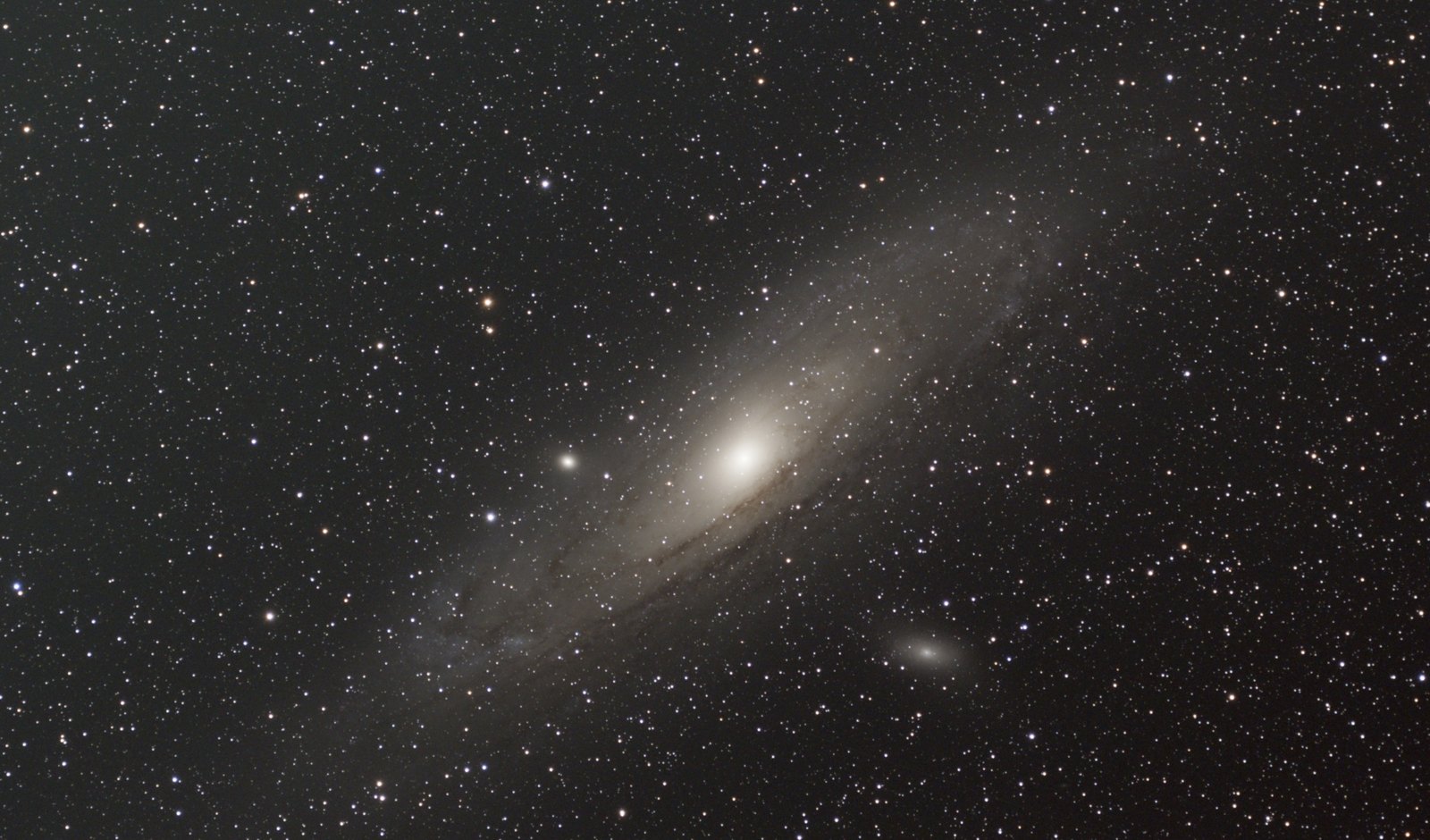
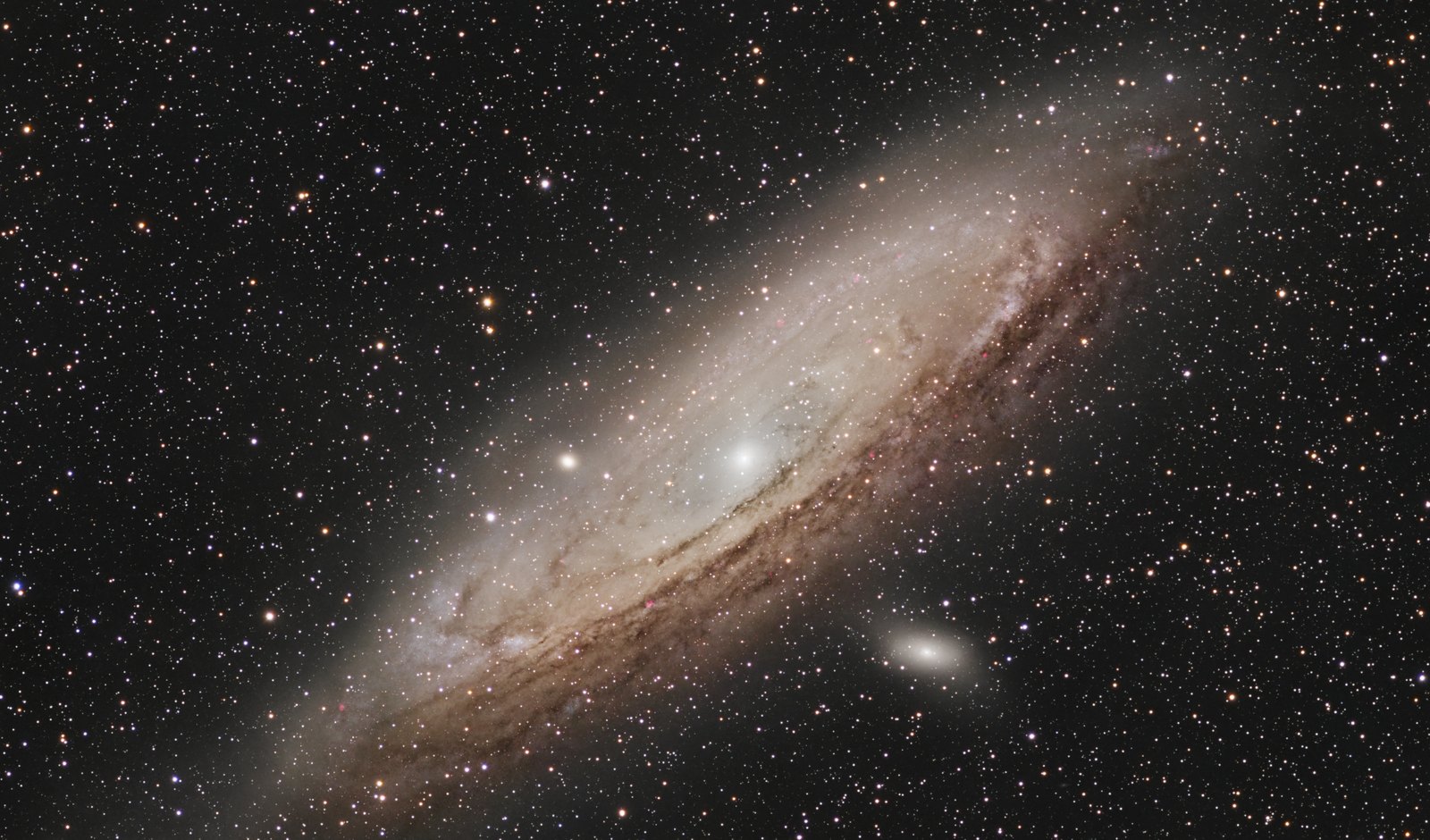
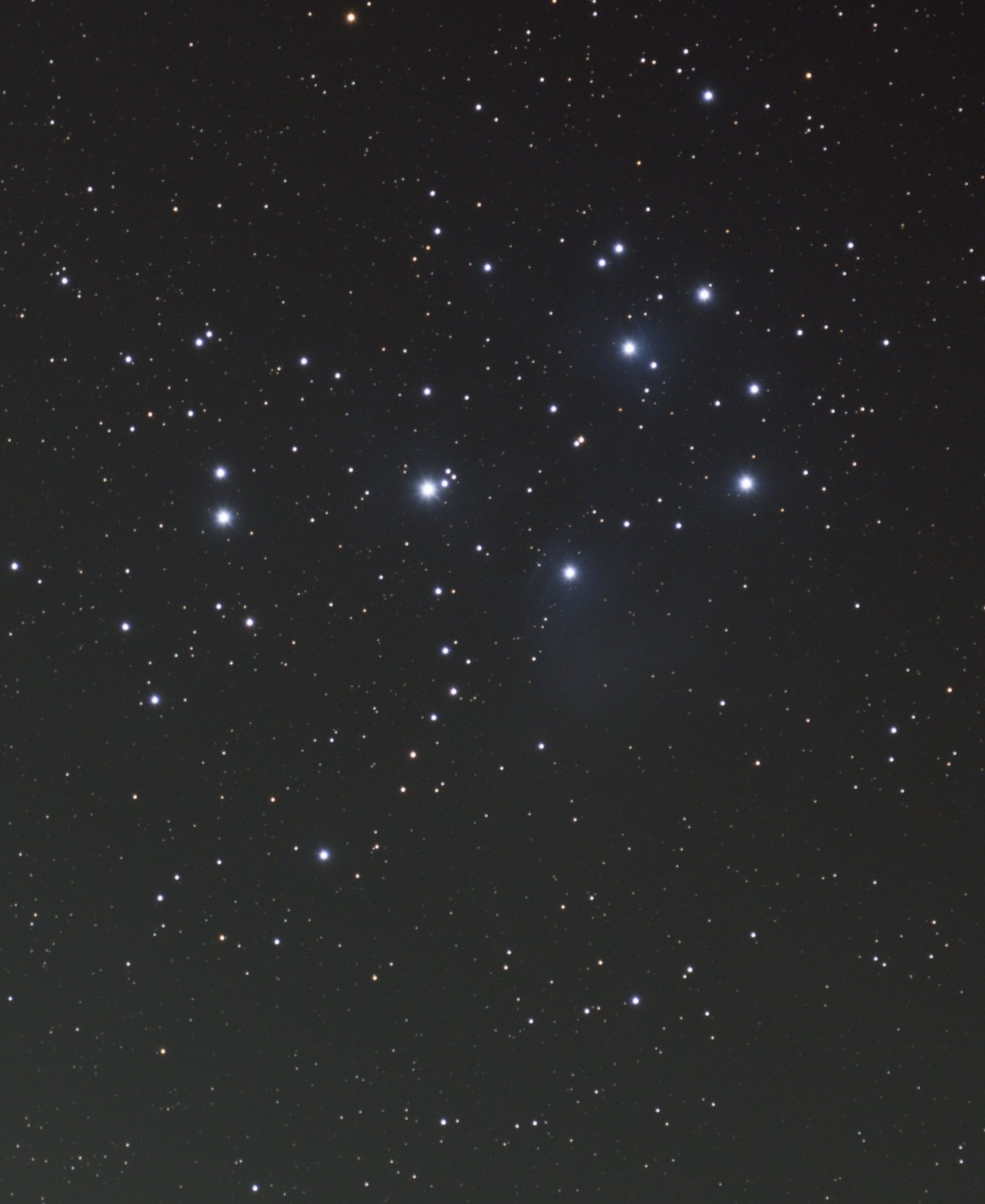
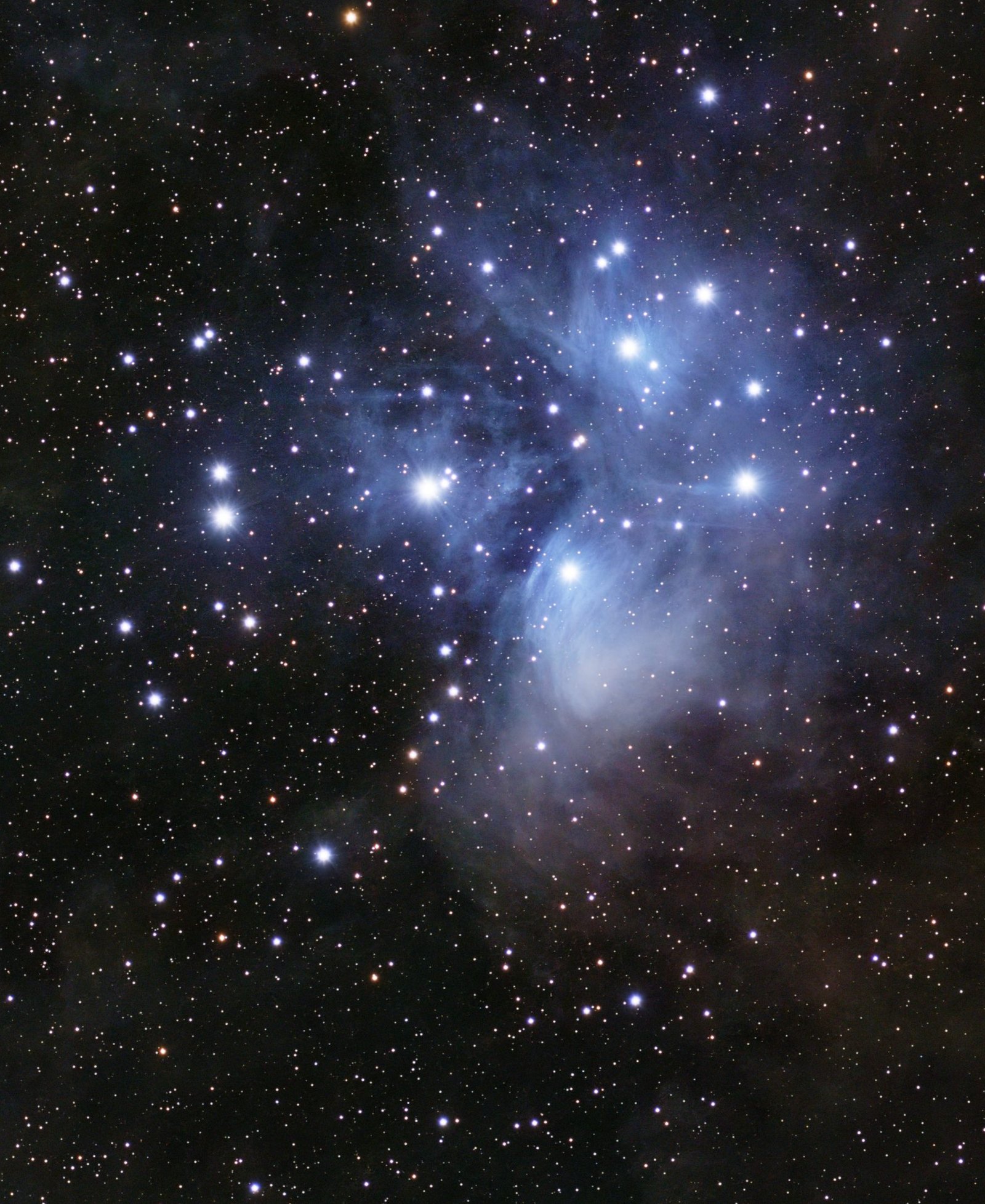
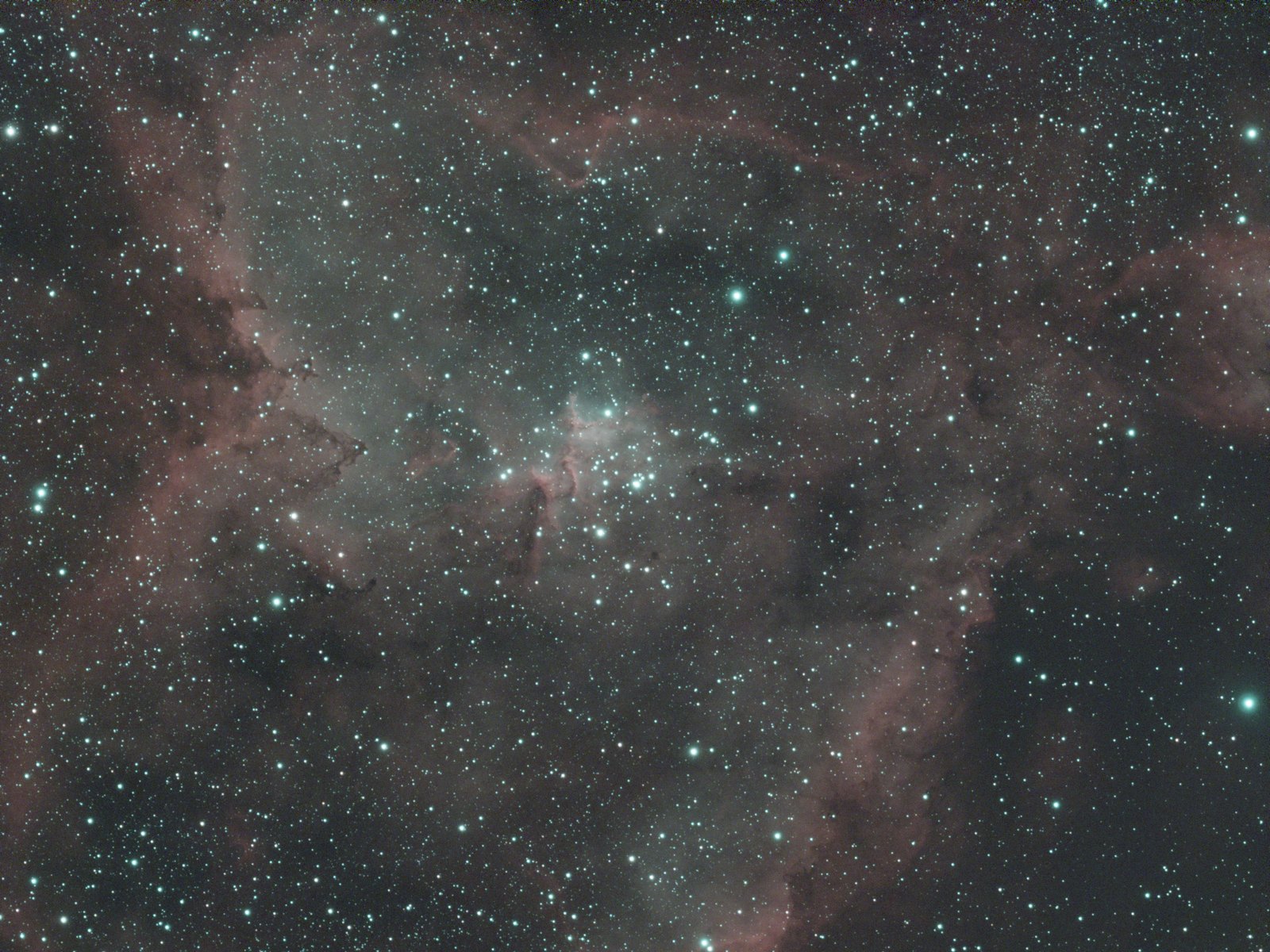
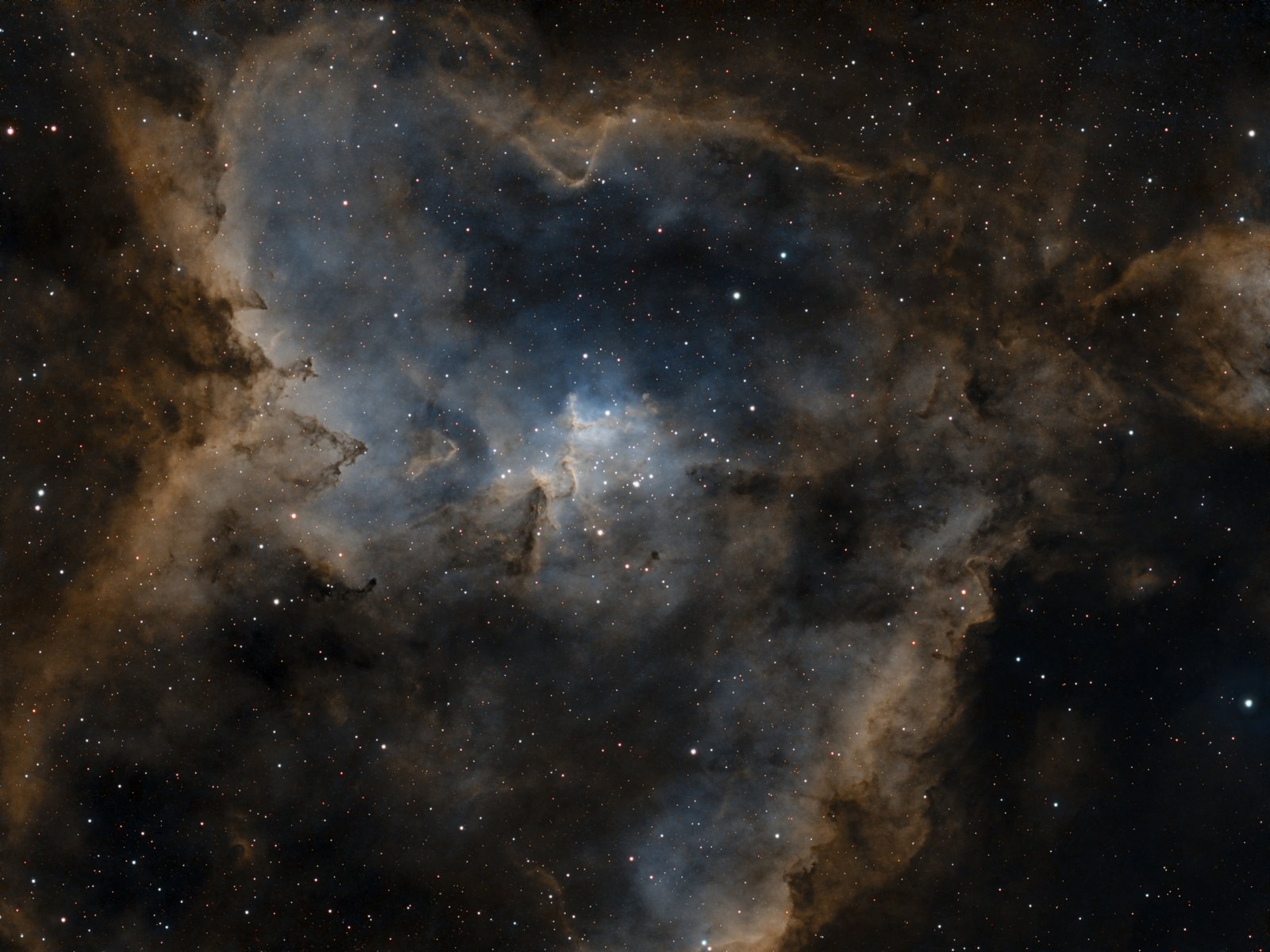
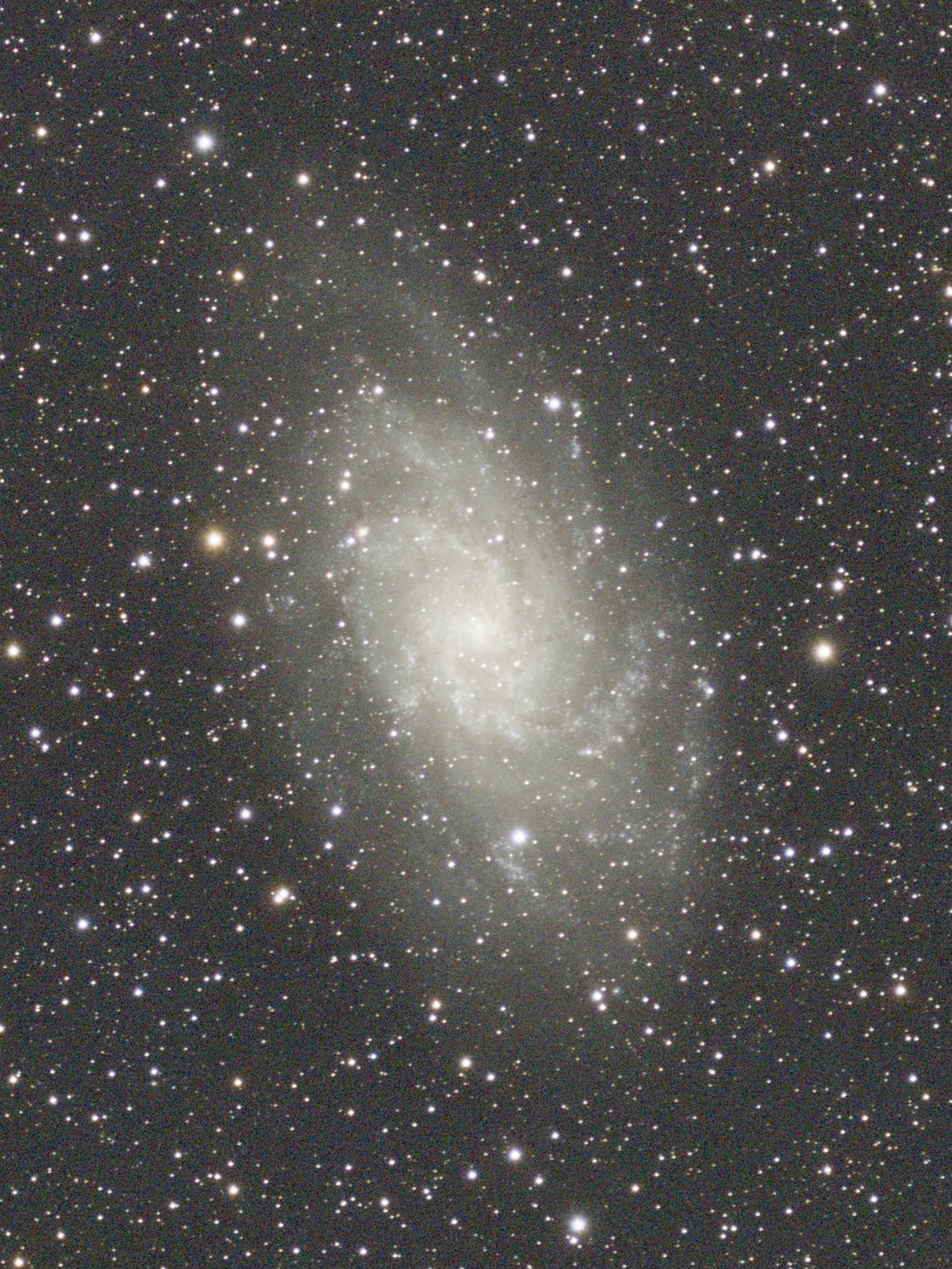
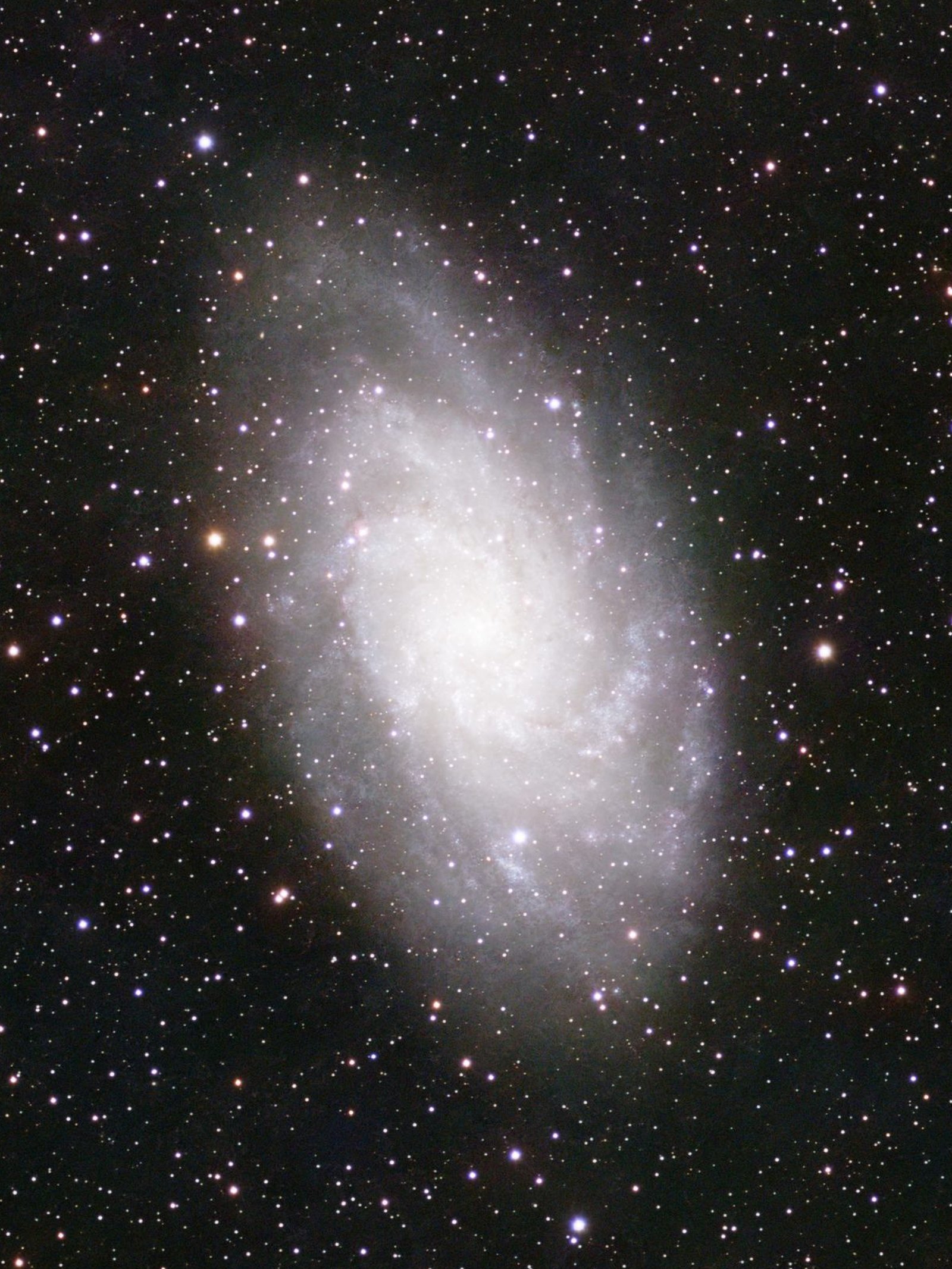
Drag the line across each picture. The left side is what the telescope's app produced; the right side is the same data after processing.
Seestar appProcessed
The Pleiades, M45
The app's own stack shows the stars and a hint of haze. Two nights combined and processed bring out the blue dust the cluster is drifting through.
Scope
Seestar S30 Pro
Data
58 × 60 s, IR-cut filter, 58 min
Nights
7 Oct, Brampton; 16 Oct, Acomb
Plain stretchProcessed
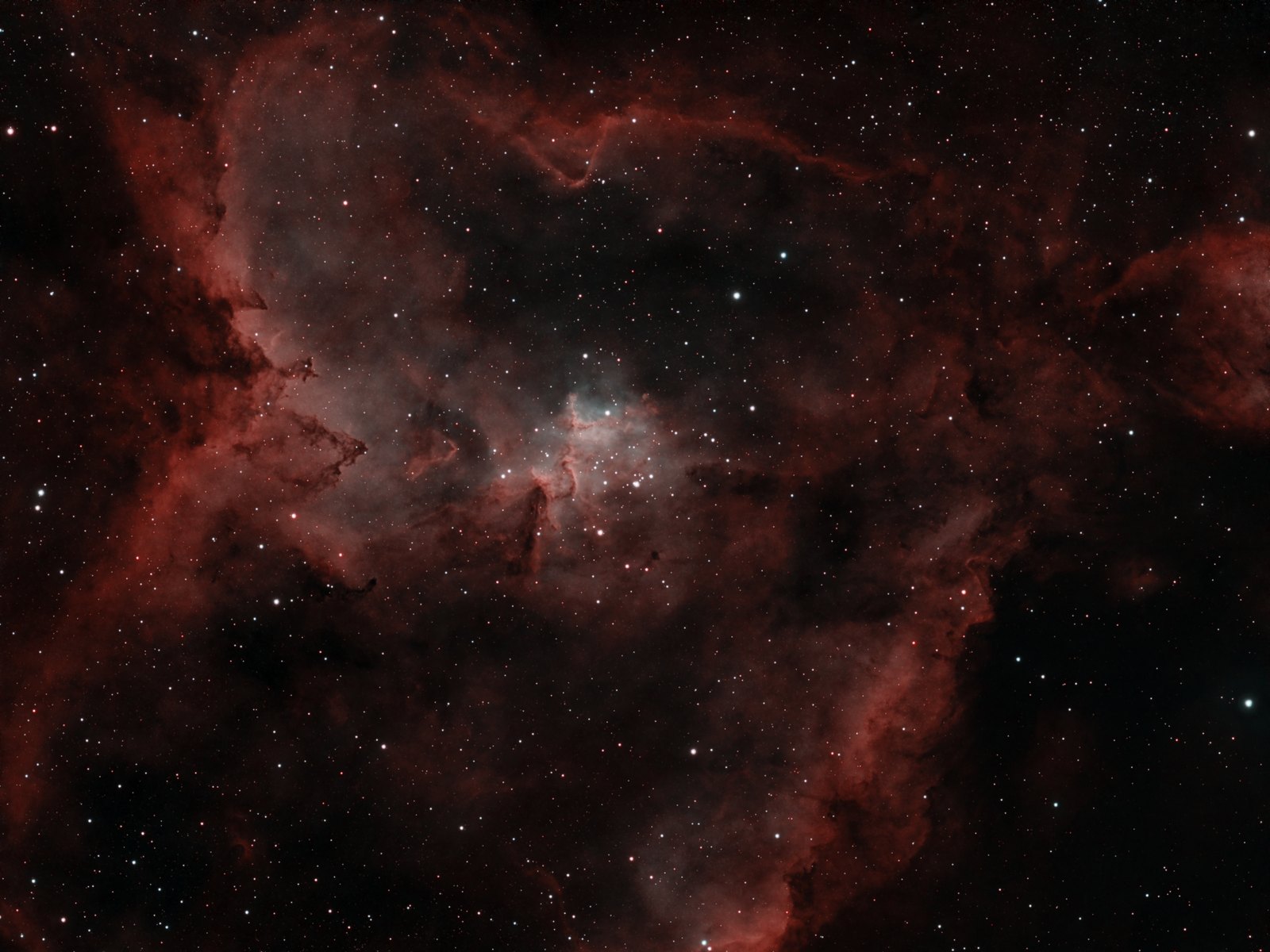
Inside the Heart Nebula, IC 1805
Narrowband data from a Draco. Hydrogen is mapped to orange and oxygen to blue, so you can see where each gas glows around the young cluster at the centre.
Scope
DWARFLAB Draco
Data
36 × 300 s, dual-band Hα/OIII, 3 h
Palette
R = Hα · G = (Hα+OIII)/2 · B = OIII
Data: DWARFLAB test stack, shared for the community to process
Plain stretchProcessed
The Triangulum Galaxy, M33
A face-on spiral three million light years away. Sharpening and careful star handling let the arms and their knots of new stars stand out from the star field.
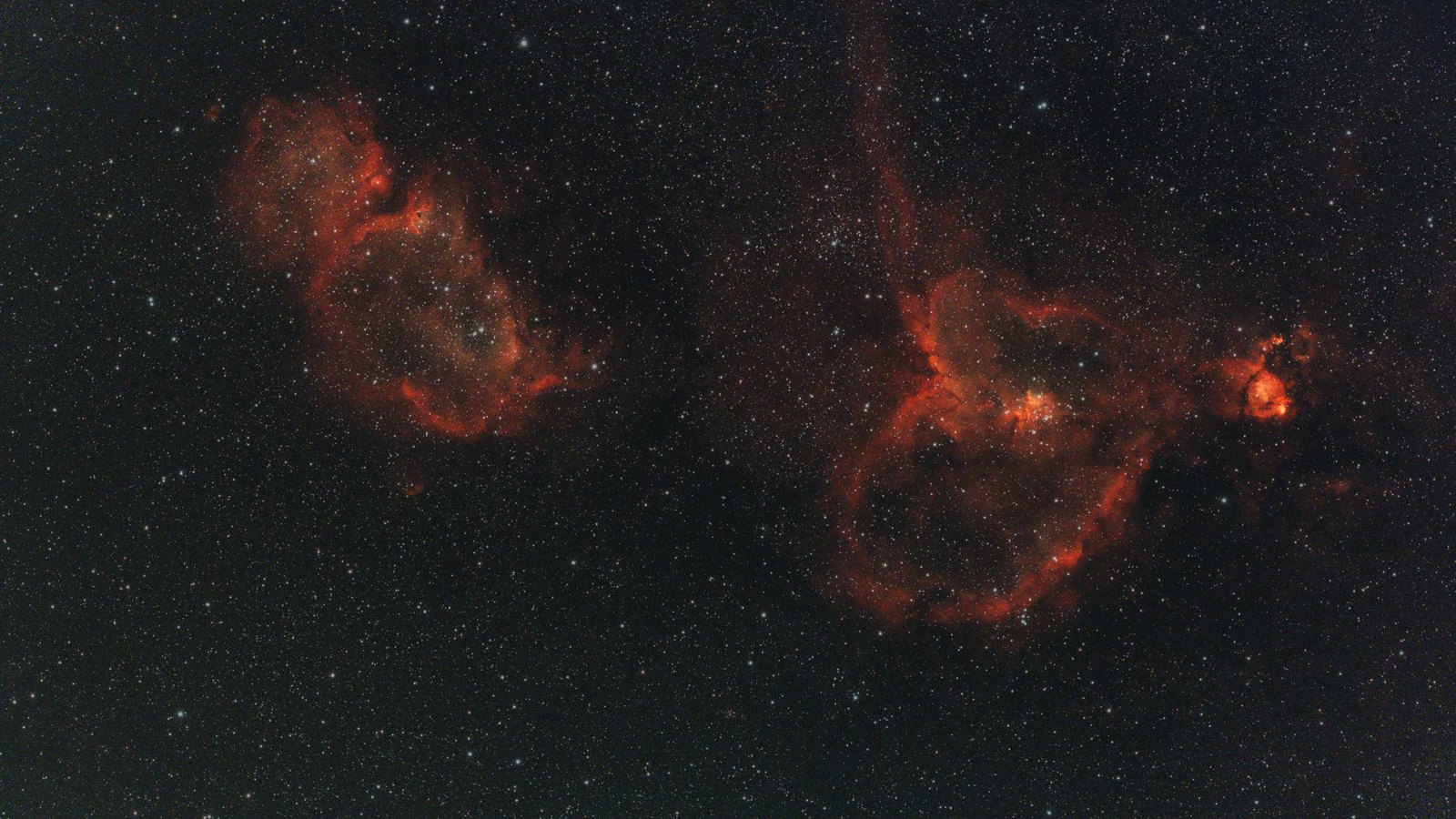
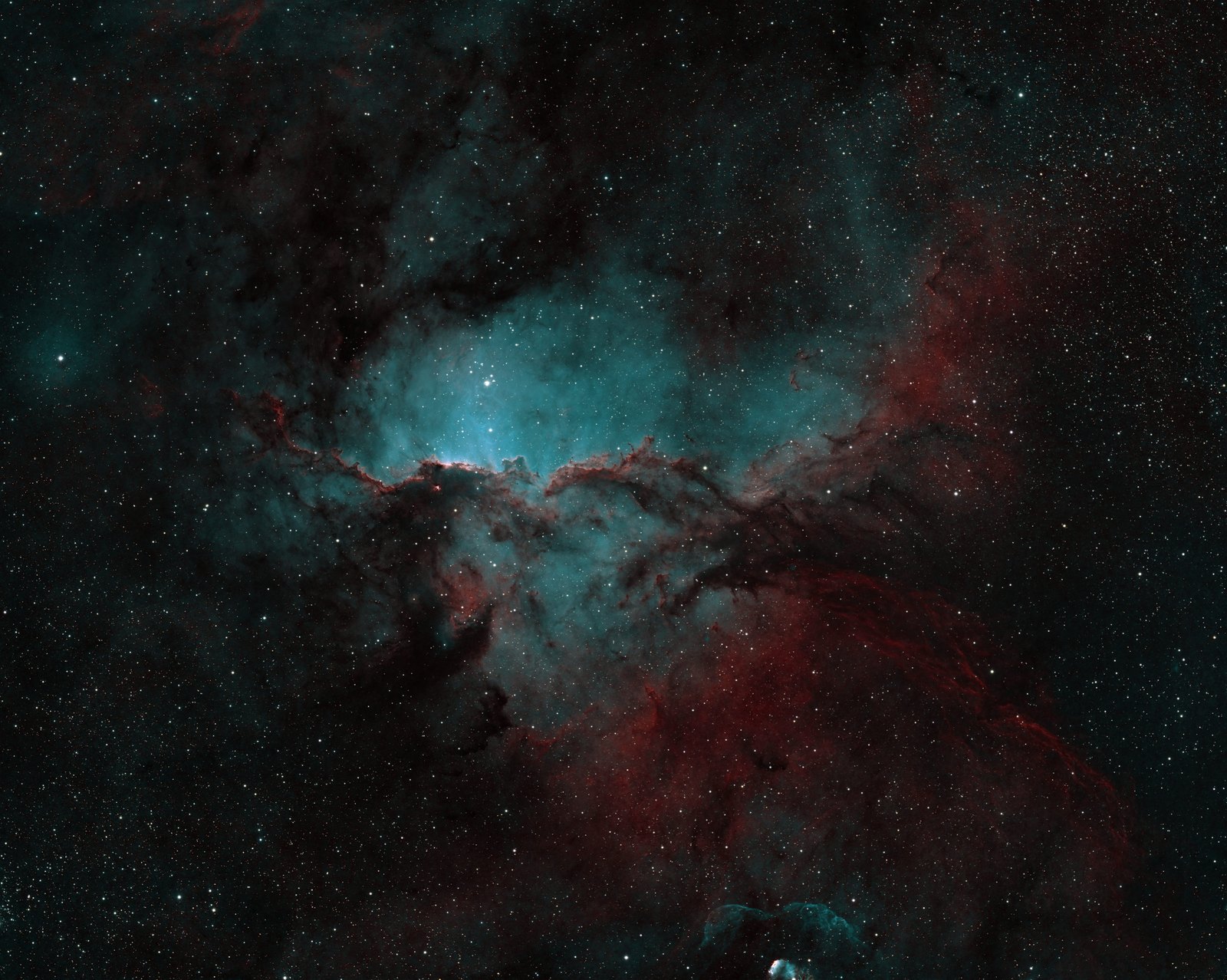
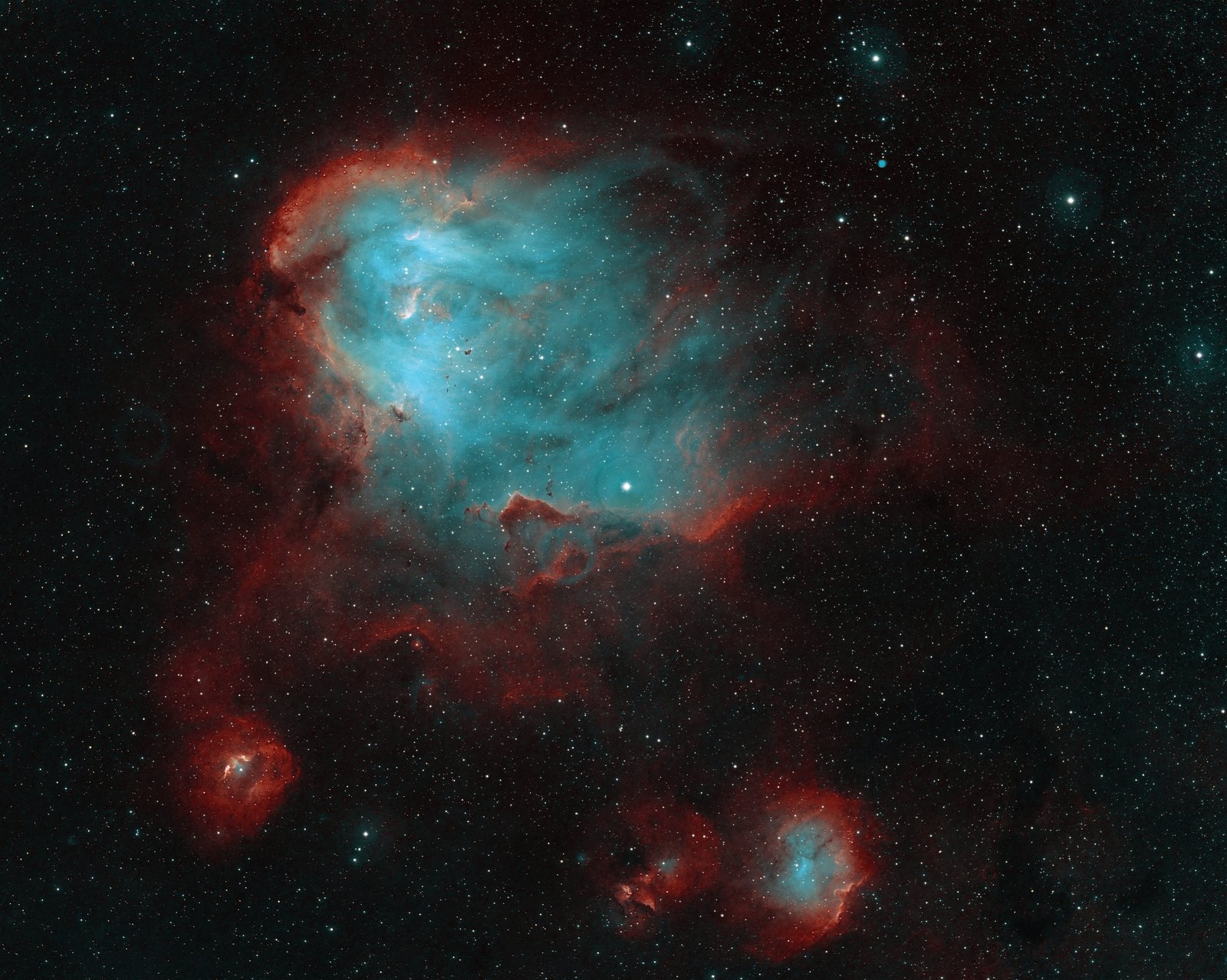
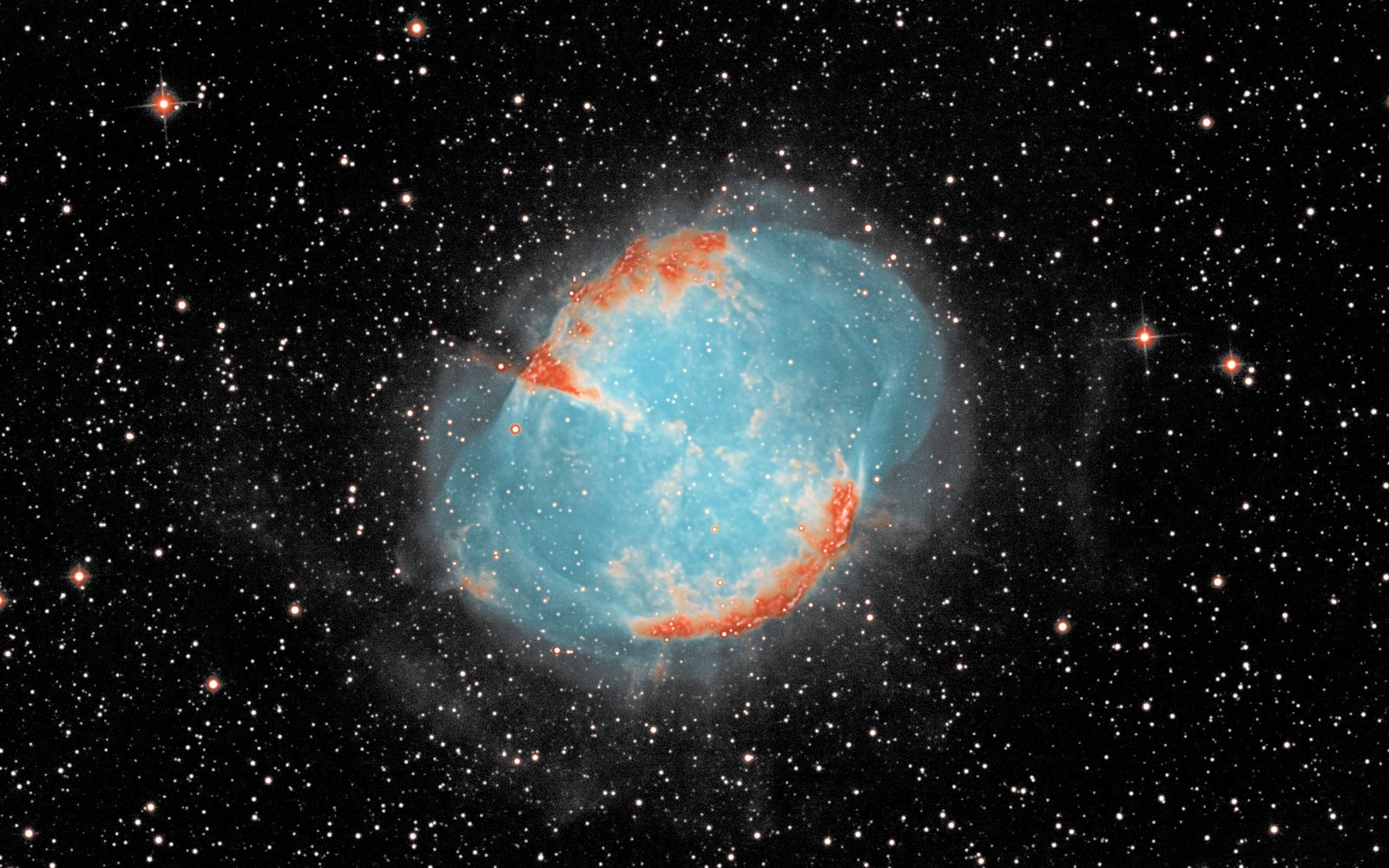
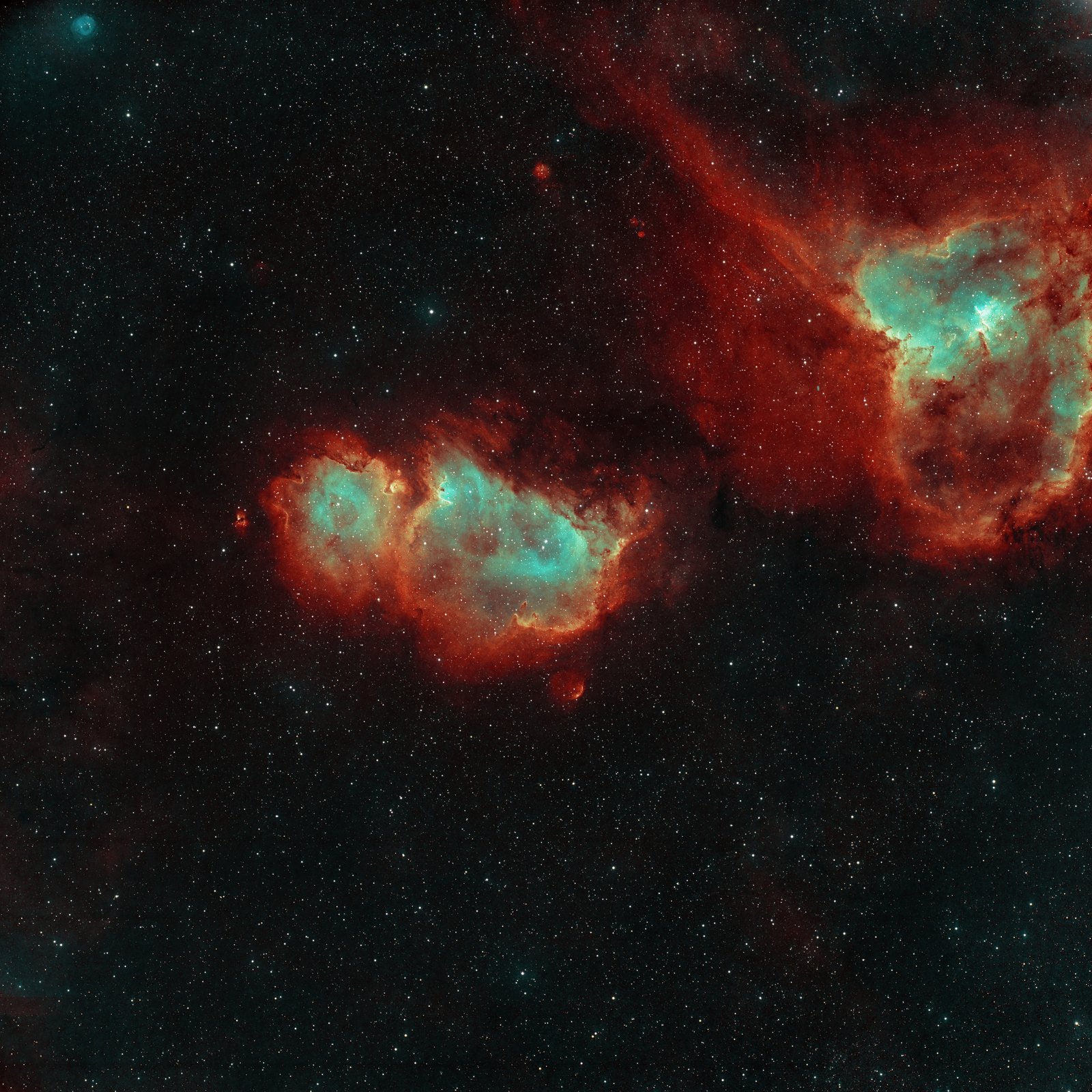
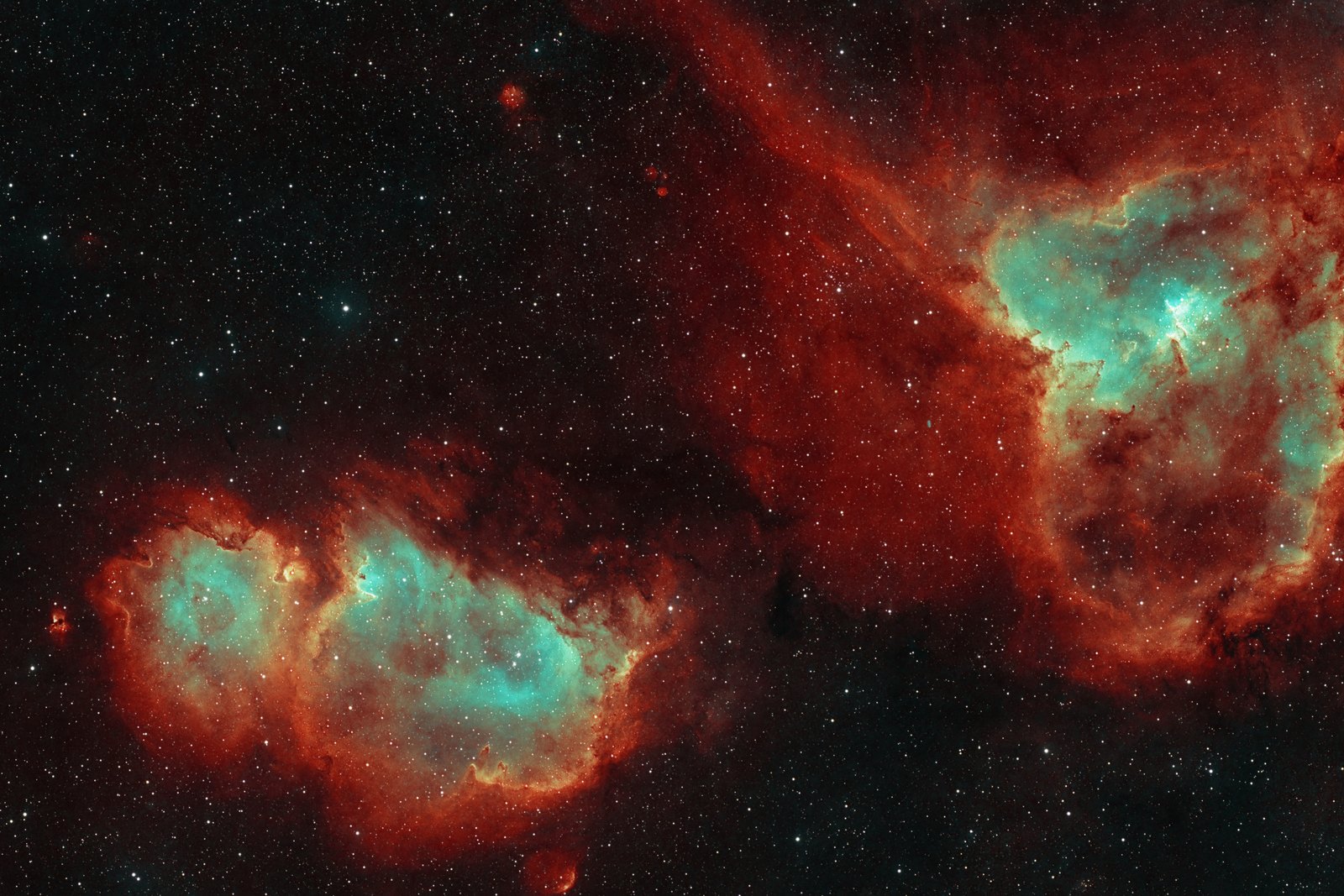
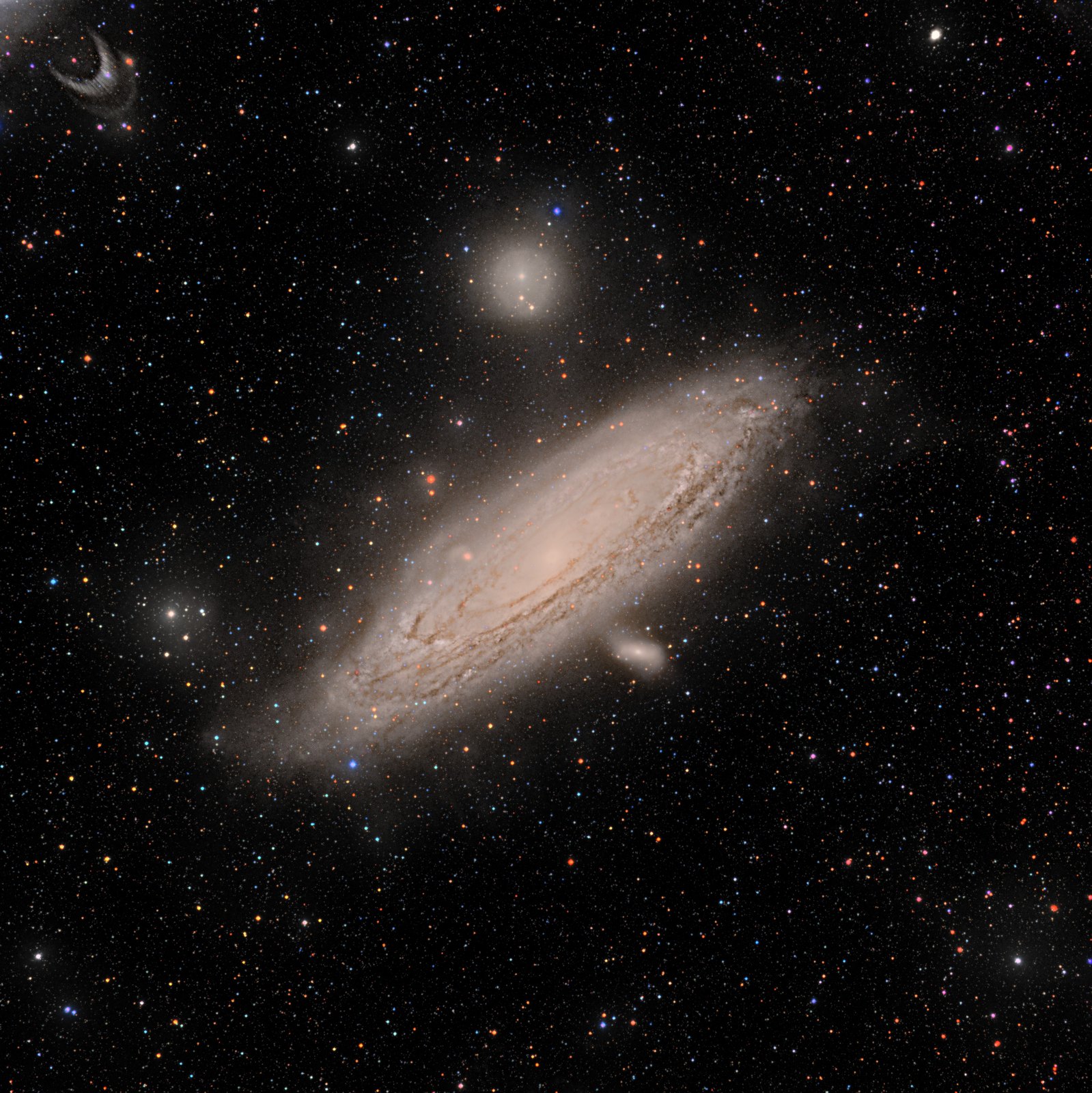
Heart and Soul, IC 1805 and IC 1848Seestar S30 Pro mosaic · 1,702 × 20 s, LP filter, 9.5 hThe Fighting Dragons of Ara, NGC 6188Hubble palette, SII · Hα · OIIIProcessed by Mark Stanners, original data from Telescope LiveThe Running Chicken, IC 2944Hubble palette, SII · Hα · OIIIProcessed by Mark Stanners, original data from Telescope LiveHeart core, natural colourDWARFLAB Draco, in natural colour: Hα red and OIII tealData: DWARFLABThe Dumbbell Nebula, M27Hubble palette, SII · Hα · OIIIProcessed by Mark Stanners, original data from Telescope LiveAndromeda, M31634 frames over three nights plus 2.8 h of Hα, Seestar S30 Pro
Telescope Live images are processed from my own subscription. Their licence doesn't allow subscribers to pass data on, so I can't process TL data for others.
Prints
Pictures for the wall
Prints from my own Seestar and Vespera data, captured across Tyneside, Northumberland and Cumbria, plus professional data from Telescope Live. Printed on fine-art paper.
Indicative prices during the pilot · unframed fine-art giclée
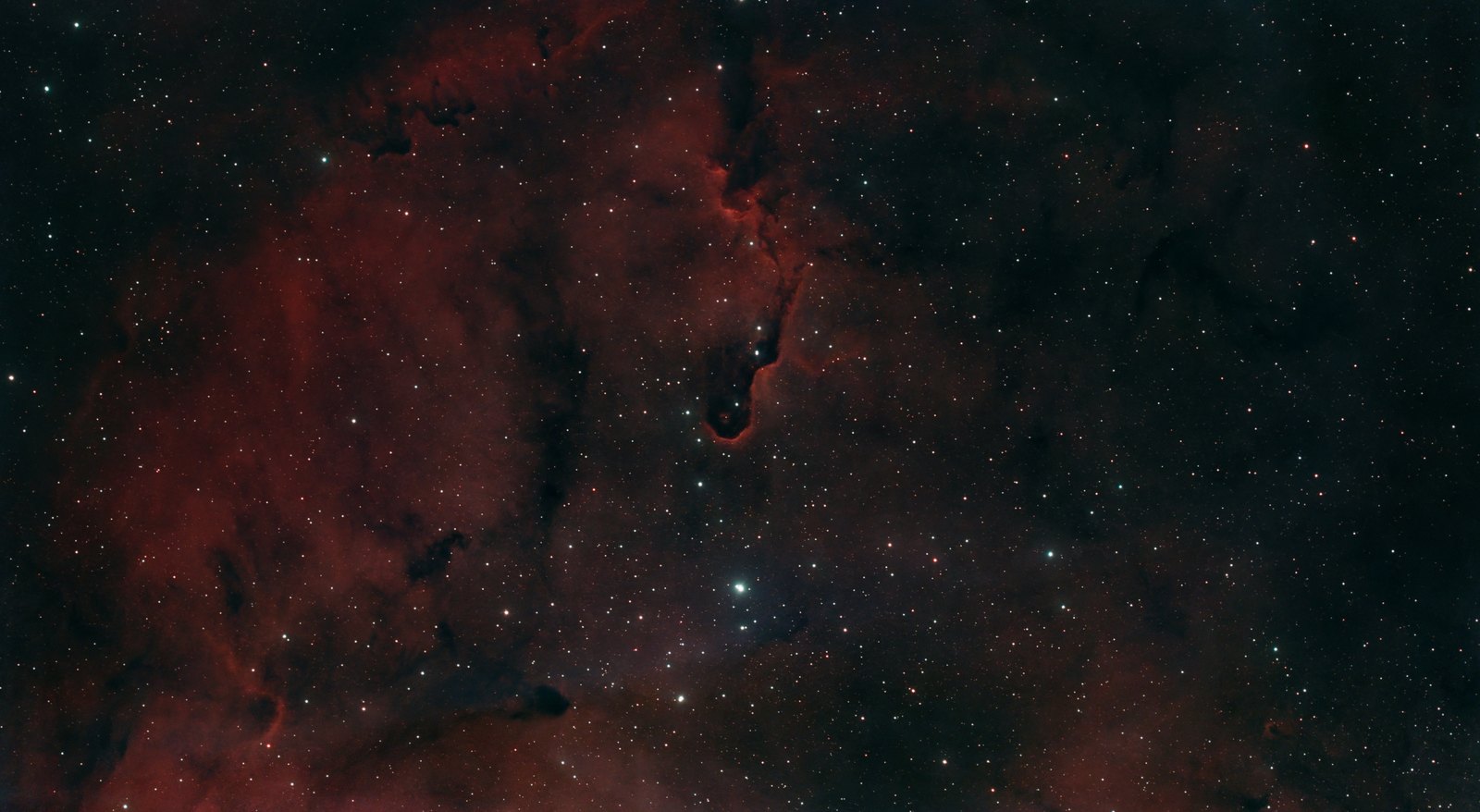
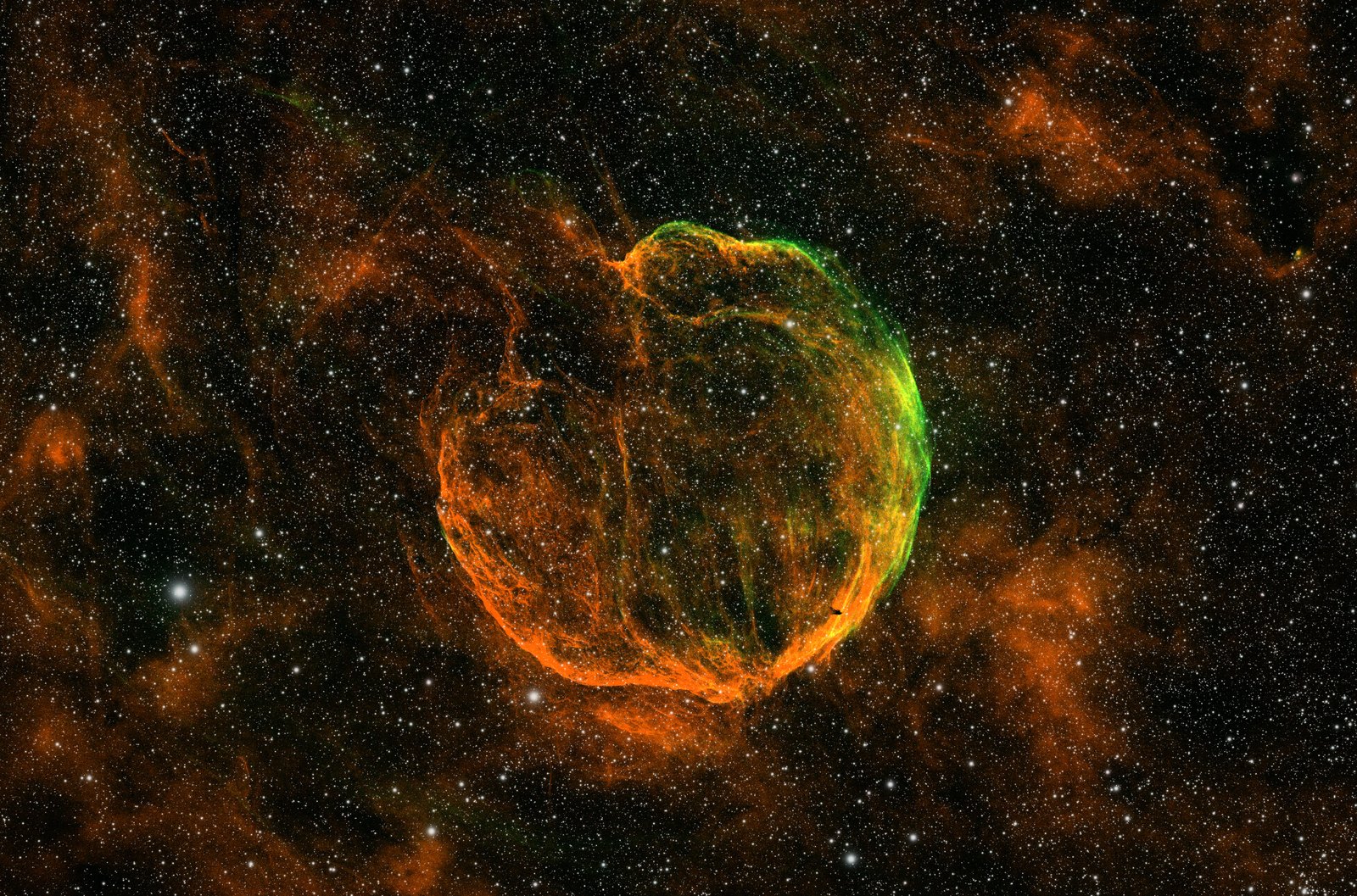
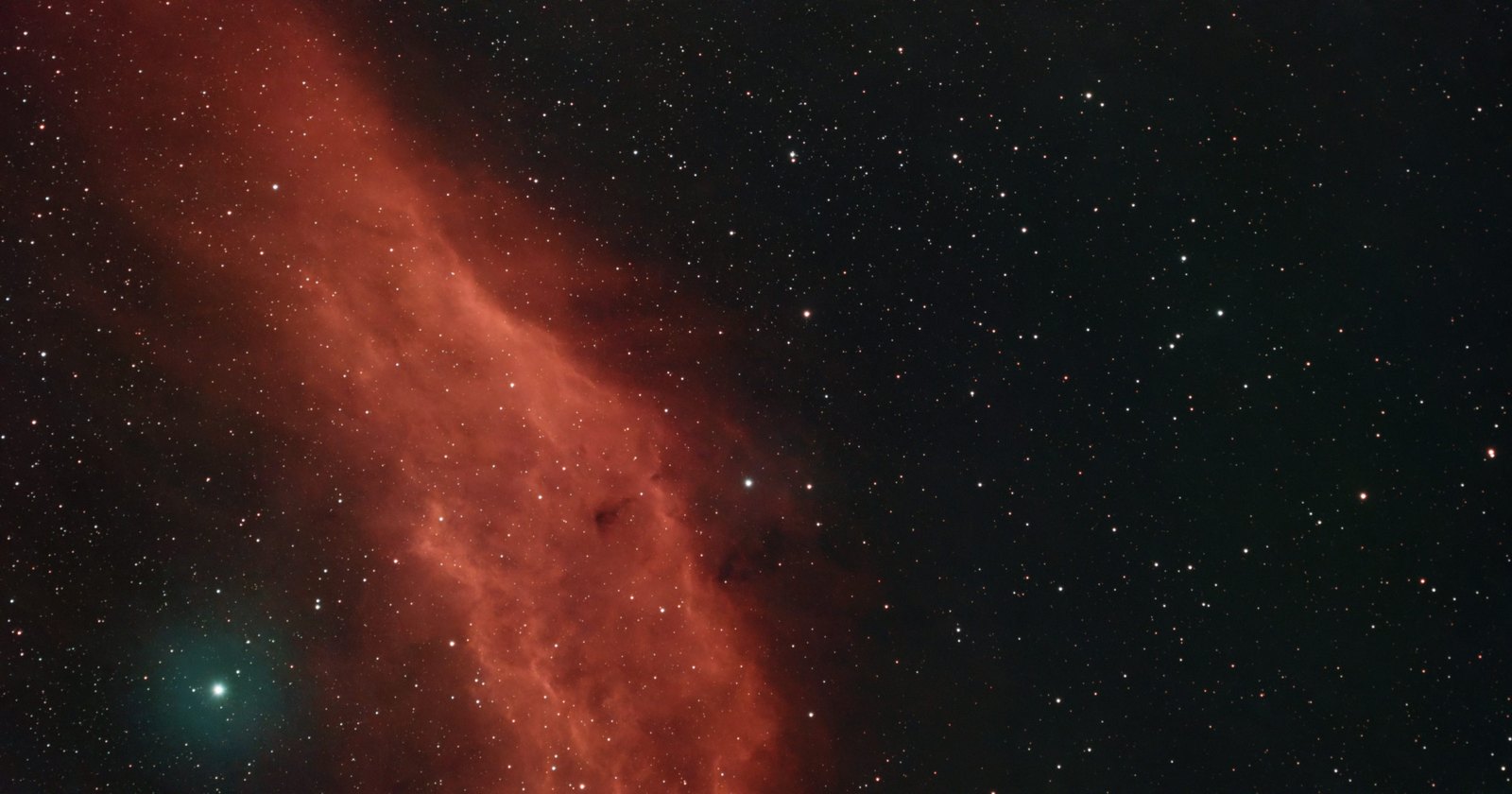
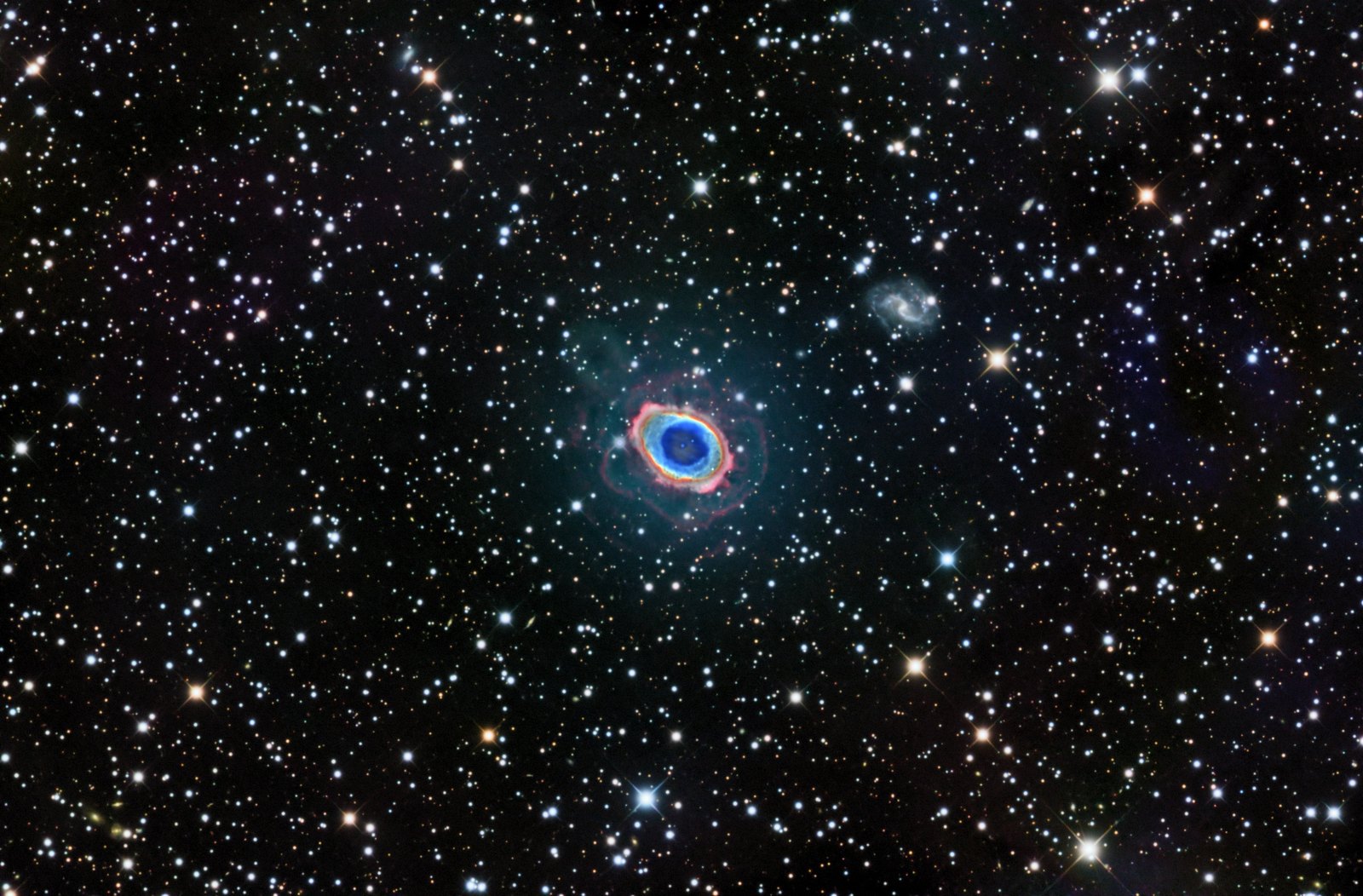
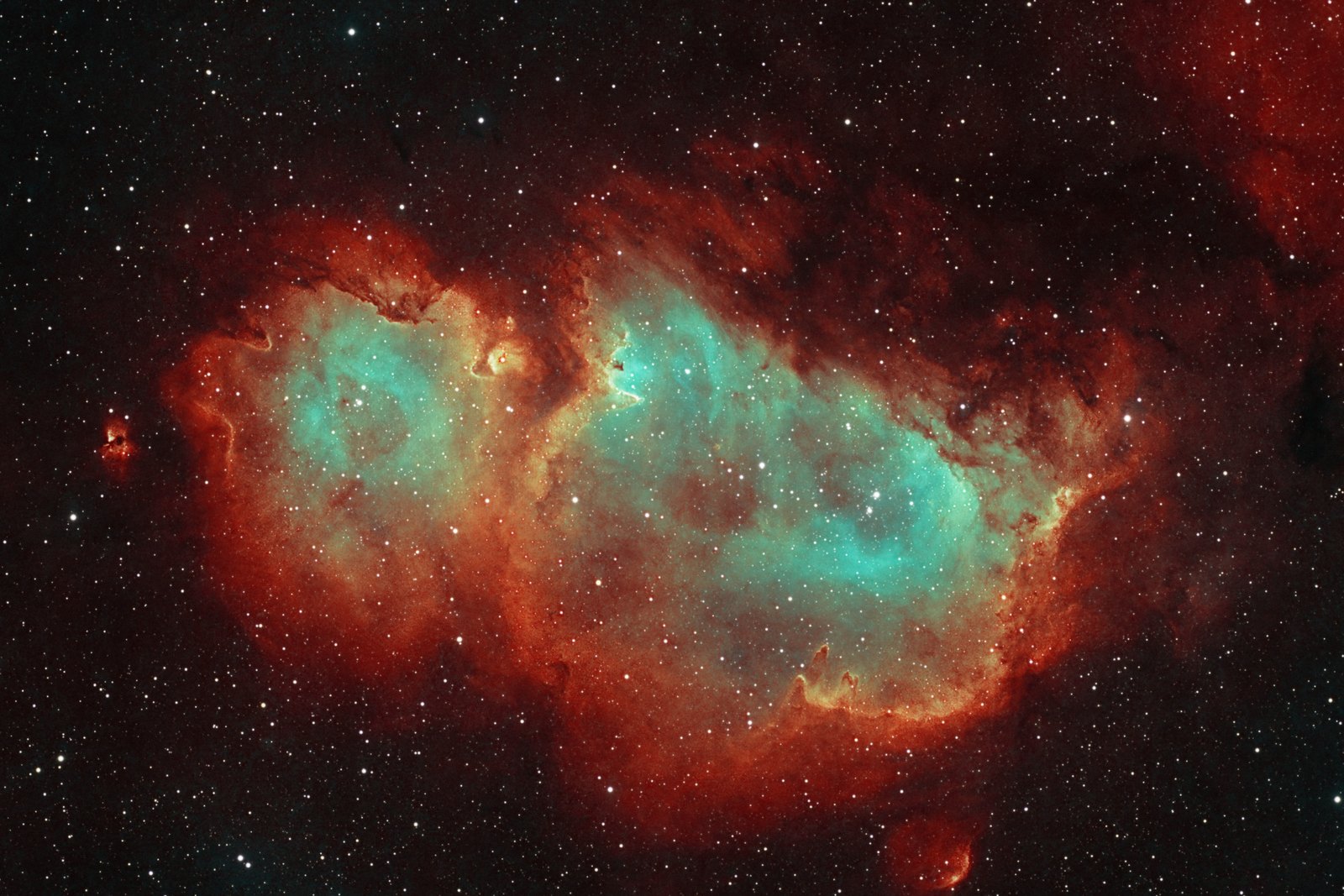
Heart and Soul9.5 hCaptured and processed by Mark Stanners, SeestarA4 £30 · A3 £50 · A2 £90A1 on requestAndromeda, M318.6 hours of light, three nights, nearly 100 miles of driving to dark skies.Captured and processed by Mark Stanners, SeestarA4 £30 · A3 £50The Pleiades, M4558 min · 2 nightsCaptured and processed by Mark Stanners, SeestarA4 £25 · A3 £45Triangulum, M333.1 h · 1 nightCaptured and processed by Mark Stanners, SeestarA4 £25 · A3 £45Elephant's Trunk, IC 13963 h · 1 nightCaptured and processed by Mark Stanners, VesperaA4 £25 · A3 £45Garlic Nebula57 h 20 minProcessed by Mark Stanners, original data from Telescope LiveA4 £25 · A3 £45 · A2 £80 · A1 £150California Nebula, NGC 14993.9 h · 1 nightCaptured and processed by Mark Stanners, SeestarA4 £25 · A3 £45Horsehead, B338 h 45 minProcessed by Mark Stanners, original data from Telescope LiveA4 £25 · A3 £45 · A2 £80 · A1 £150Fighting Dragons of Ara, NGC 61887 h 40 min · in red and teal or gold and blueProcessed by Mark Stanners, original data from Telescope LiveA4 £25 · A3 £45 · A2 £80 · A1 £150Running Chicken, IC 29446 h 30 min · in red and teal or gold and blueProcessed by Mark Stanners, original data from Telescope LiveA4 £25 · A3 £45 · A2 £80 · A1 £150Dumbbell Nebula, M2714 h 15 minProcessed by Mark Stanners, original data from Telescope LiveA4 £25 · A3 £45 · A2 £80Butterfly Cluster, M712 hProcessed by Mark Stanners, original data from Telescope LiveA4 £25 · A3 £45 · A2 £80Eagle Nebula, M1623 h 04 minProcessed by Mark Stanners, original data from Telescope LiveA4 £25 · A3 £45Ring Nebula, M5712 h 50 minProcessed by Mark Stanners, original data from Telescope LiveA4 £25Heart and Soul, wide field (IC 1805 and IC 1848)21 h 50 min · in red and teal or gold and blue · with the rare planetary nebula Sh2-200 in the top cornerProcessed by Mark Stanners, original data from Telescope LiveA4 £25 · A3 £45 · A2 £80 · A1 £150Heart and Soul, Telescope Live21 h 50 min · in red and teal or gold and blueProcessed by Mark Stanners, original data from Telescope LiveA4 £25 · A3 £45 · A2 £80A1 on requestSoul Nebula, IC 184821 h 50 min · in red and teal or gold and blueProcessed by Mark Stanners, original data from Telescope LiveA4 £25 · A3 £45Andromeda, deep (Seestar + Telescope Live)Seestar data by Mark Stanners, combined with Telescope Live dataA4 £30 · A3 £50 · A2 £90
P&P: £6 for A4 and A3 (sent flat), £9 for A2 and A1 (rolled in a tube).
Free on request: a small legend in the corner with the object's name and a line about it, and a signature. Nice for a gift; say if you'd like your own wording or a name added.
Acrylic and metal
Most images can also be made as a face-mounted acrylic or an aluminium-mounted print: deep blacks, ready to hang, no frame needed. Priced on request; as a guide, from about £120 at A3 and £220 at A2.
At A3: Heart and Soul; Andromeda, M31; The Pleiades, M45; Triangulum, M33; Elephant's Trunk, IC 1396; Garlic Nebula; California Nebula, NGC 1499; Horsehead, B33; Fighting Dragons of Ara, NGC 6188; Running Chicken, IC 2944; Dumbbell Nebula, M27; Butterfly Cluster, M7; Eagle Nebula, M16; Heart and Soul, wide field (IC 1805 and IC 1848); Heart and Soul, Telescope Live; Soul Nebula, IC 1848; Andromeda, deep (Seestar + Telescope Live).
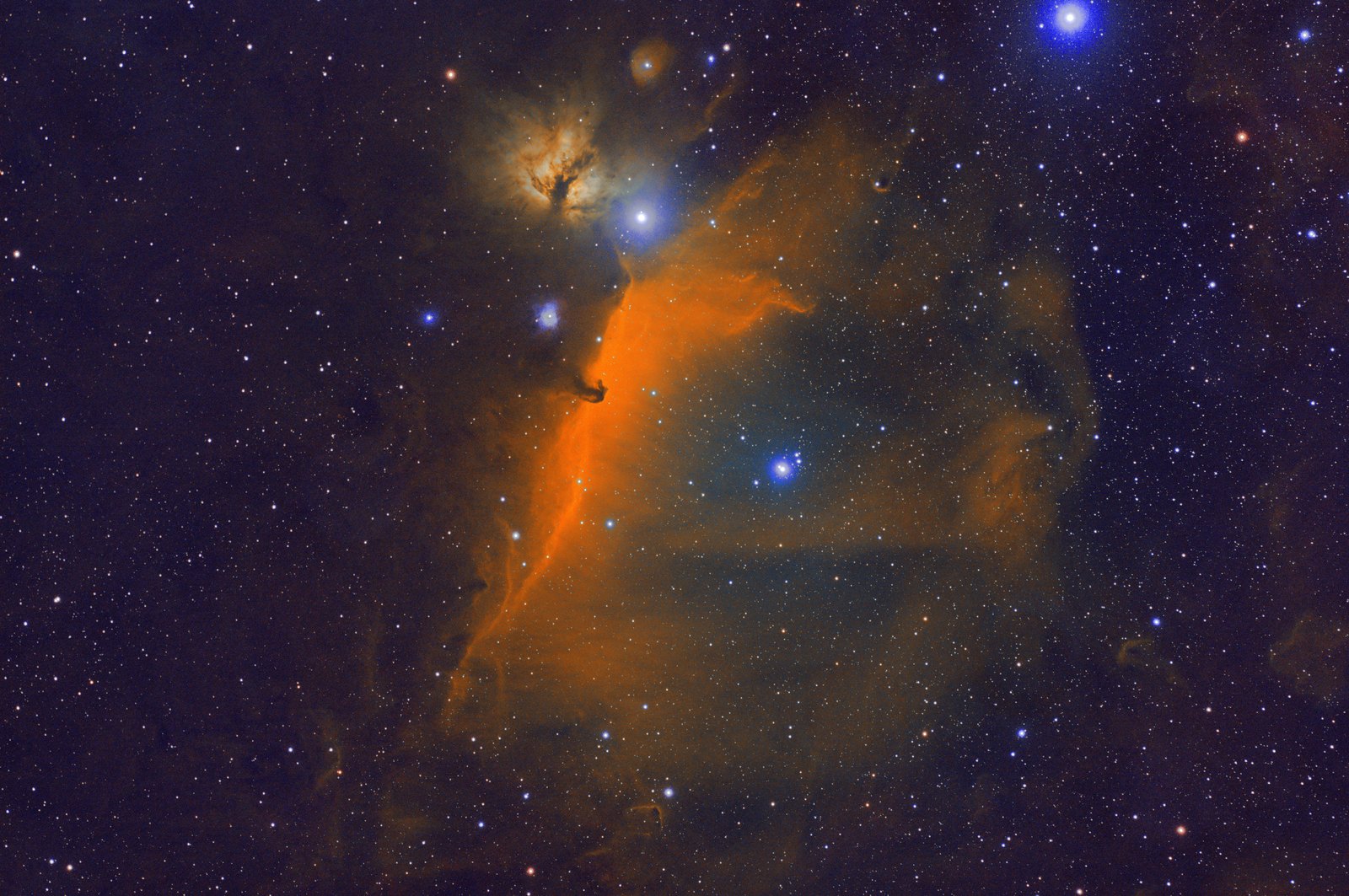
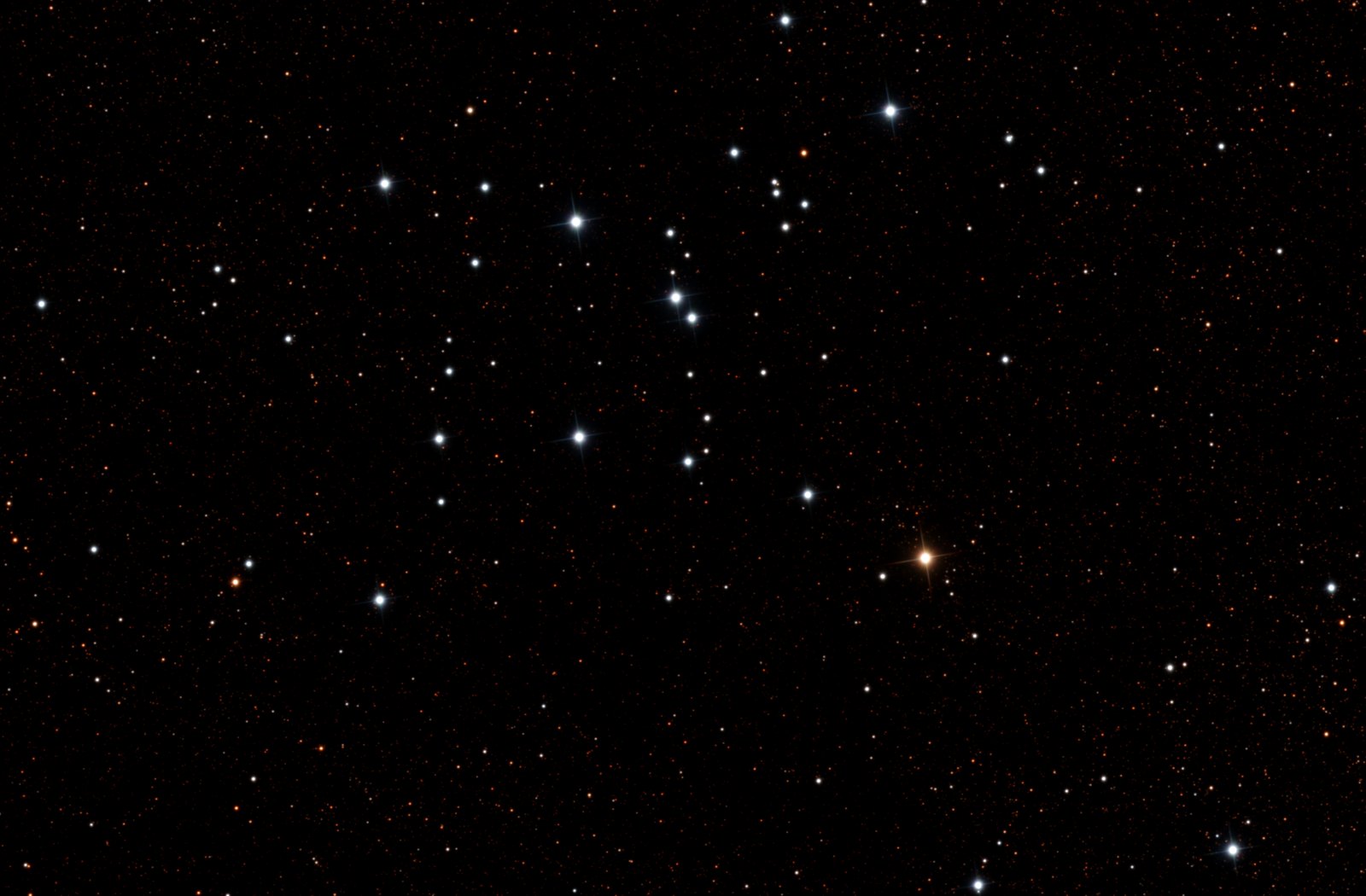
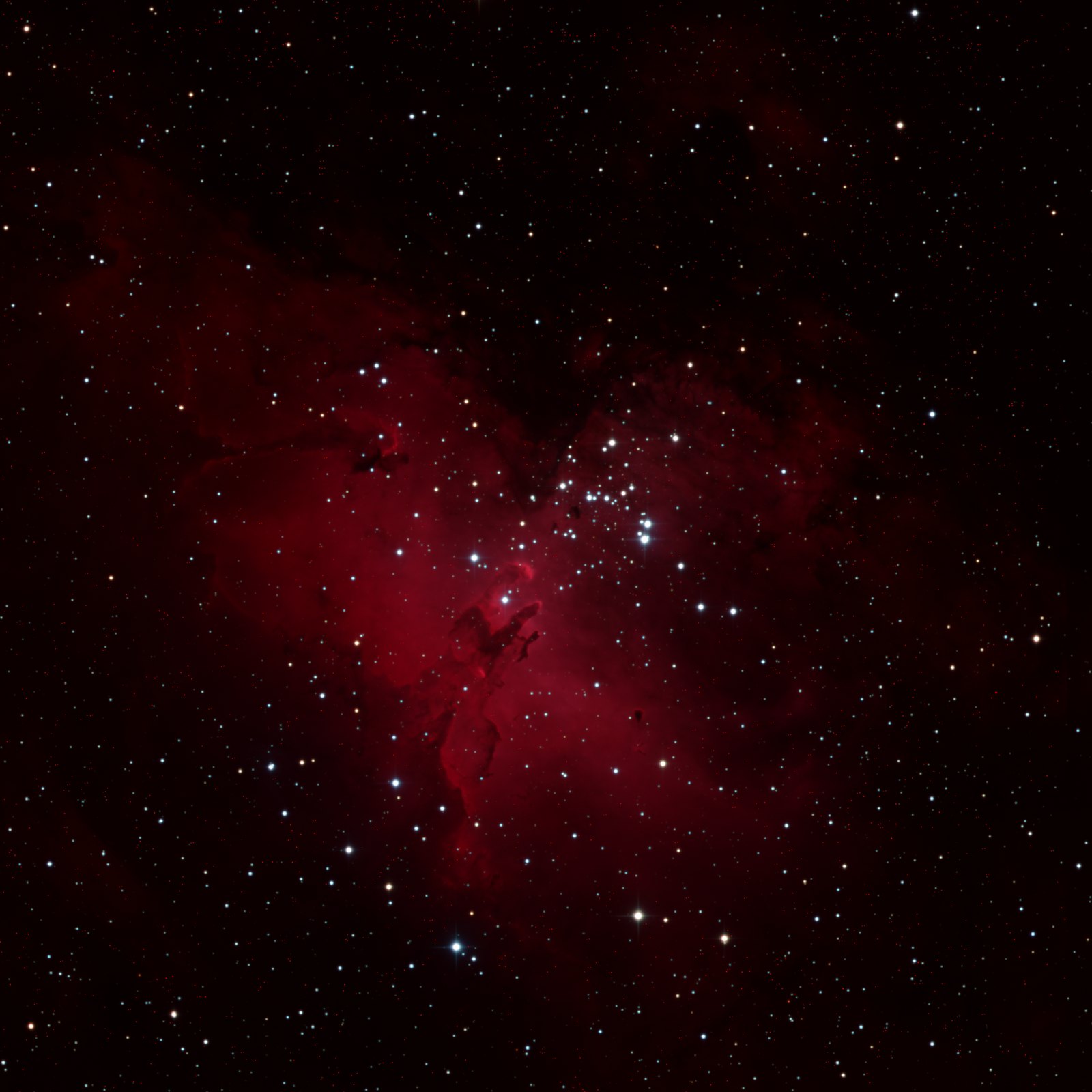
At A2: Heart and Soul; Garlic Nebula; Horsehead, B33; Fighting Dragons of Ara, NGC 6188; Running Chicken, IC 2944; Dumbbell Nebula, M27; Butterfly Cluster, M7; Heart and Soul, wide field (IC 1805 and IC 1848); Heart and Soul, Telescope Live; Andromeda, deep (Seestar + Telescope Live).
To order, email me with the picture, size and finish, and whether you'd like the legend.
How it works
Three steps, no software to buy
Send the frames
Pick the folder of individual frames in the box below and it does the rest. On a Seestar that's the …_sub folder, full of Light_*.fit files; you can pick the whole folder and only the frames are sent. From ASIAIR, NINA and similar, include your flats, darks and bias; they go up with the lights.
I process them
Every frame is checked for cloud, dew and trailing. The good ones are stacked in PixInsight, then cleaned up, colour-calibrated against star catalogues and finished by hand.
You get the picture
A full-size 16-bit TIFF for printing, a JPEG for sharing, and a short note on what the data showed and what would improve it next time.
Prices
Starting with a pilot
Now
Free pilot
A handful of datasets from friends, the local society and the Draco group
In return: feedback, and permission to show the result here
Planned
£— single target
One night or several of the same object
TIFF and JPEG, one round of tweaks
Planned
£— narrowband or mosaic
Dual-band or SHO colour palettes
Multi-panel mosaics joined and balanced
Prices will be set once the pilot shows how long typical datasets take.
Questions
Before you send anything
Who owns the finished image?
You do. It's your data and your picture. I'll only show it here if you say yes.
Do you use AI tools?
Yes, and openly. Noise reduction, star removal and sharpening use specialist astronomy tools that run on trained models, alongside conventional PixInsight processing. These tools can occasionally make up detail, so every result is checked at full size against the plain stack, and anything that isn't in your frames comes out.
Which telescopes work?
Any setup that saves its individual frames as FITS files. Smart telescopes so far: the ZWO Seestar S30 and S50, DWARFLAB's Dwarf range including the new Draco, and the Vaonis Vespera (its files need a small correction before stacking, which I handle). Dedicated rigs work too: any telescope with a colour or mono astro camera, from ASIAIR, NINA or similar. With a mono camera, send each filter's frames (Hα, OIII, SII, or L, R, G, B) and I'll combine them into colour. If yours is something else, send a few frames and I'll check them first.
Do I need calibration frames?
Smart telescopes handle this themselves, so just send the lights. With your own camera, flats matter most: they remove dust shadows and the darkening towards the corners. Darks and bias help too. Send whatever you have, and say if they came from a different night.
How much data should I send?
An hour is enough for bright targets. Faint nebulae and galaxies really reward three hours or more, and several nights of the same target can be combined.
What happens to my files afterwards?
You get a private download link for the finished picture. Seven days after you first download it, the link closes and your raw frames are deleted; if the link isn't opened, everything is cleared after 30 days. If you'd like your frames kept for adding more nights later, just say. I keep a copy of the finished picture and your name and email so I can send it again, and nothing is shared with anyone else.